

Case Study:
Railway Avenue
Project
Transforming a Floodplain Brownfield Site into a High-Density City Centre Development.
Location
Railway Avenue, Newry, County Down, Northern Ireland
Railway Avenue is a strategically located brownfield site in the heart of Newry City Centre.
Previously operating as a surface car park, the site offered significant redevelopment potential in a highly sustainable urban location. However, unlocking that potential required overcoming substantial planning and technical constraints.
The challenge
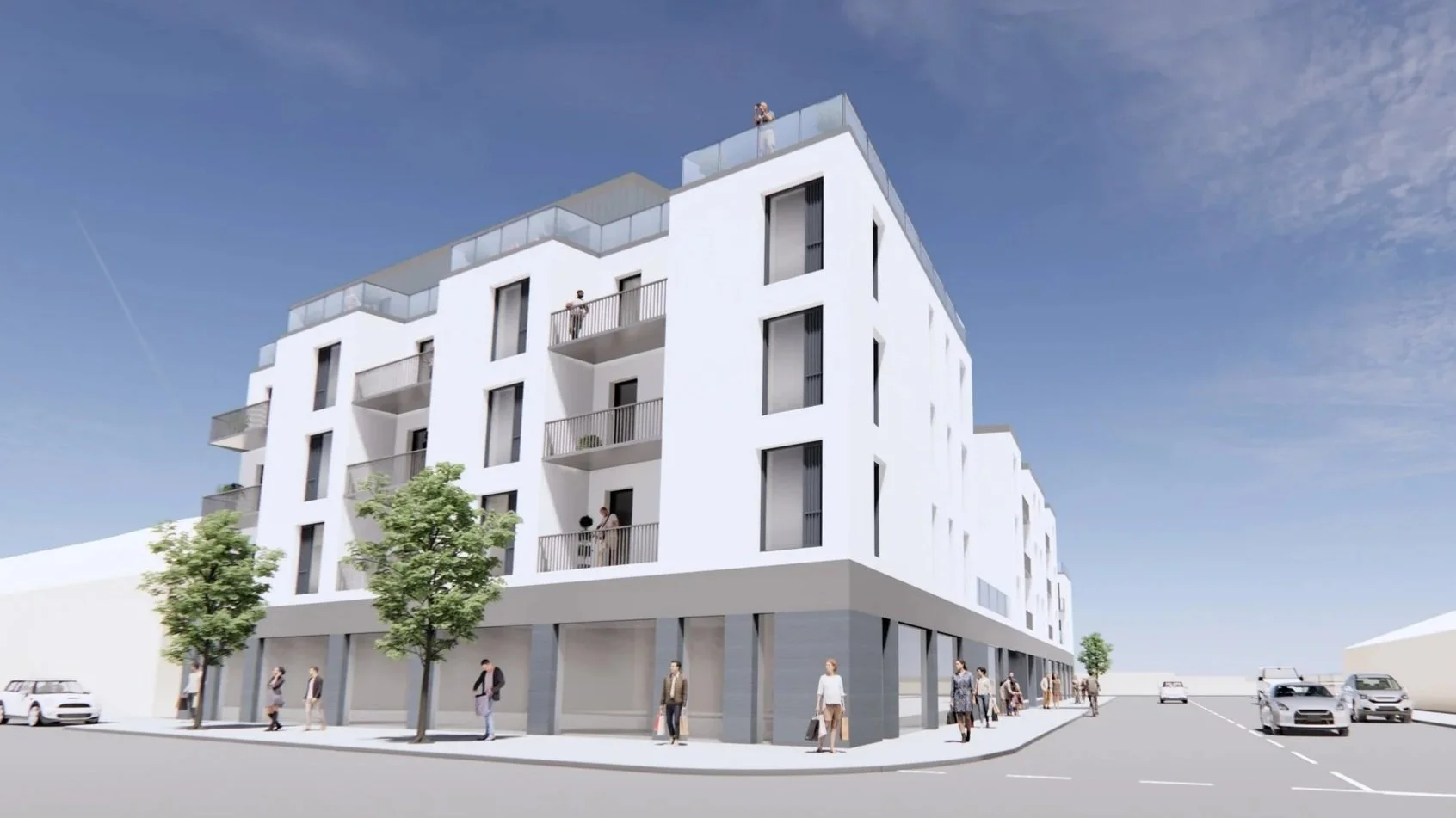
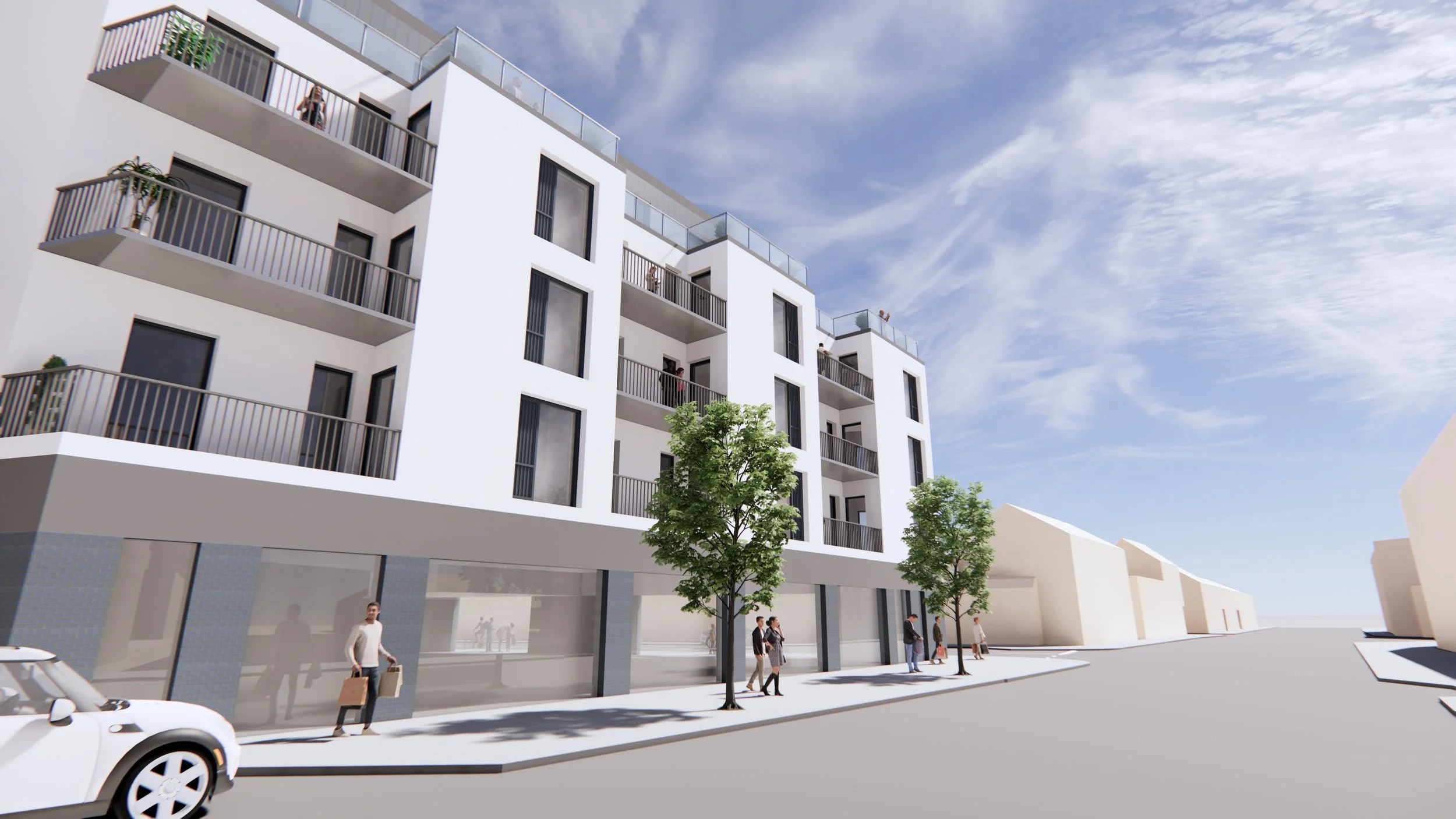
The viability of the development depended on achieving a high-density residential scheme. This could only be accomplished through increased building height, a matter that required careful engagement with the planning authority.
In addition, the site was located within a designated floodplain, similar to much of the surrounding Monaghan Street area. Under Planning Policy Statement 15 (PPS15), development within floodplains is generally restricted, creating a significant obstacle to securing planning approval.
Our approach
From the outset, we developed a planning strategy focused on addressing the flood risk policy constraints while maximising the development potential of the site.
A key element of the strategy was identifying an exception under Policy FLD1. The site contained a derelict toilet block, and by incorporating its demolition into the development proposal, the scheme qualified for an exception to the normal restrictions on development within a floodplain.
To further strengthen the application, we appointed specialist consultants, Flood Risk Consultants NI, to prepare a comprehensive flood risk assessment and develop an innovative flood mitigation strategy. The design allowed floodwater storage beneath the building during extreme flood events, ensuring there would be no adverse impact on flood risk elsewhere.
At the same time, we engaged proactively with Newry, Mourne and Down District Council through the Pre-Application Discussion (PAD) process. Through detailed discussions and negotiation, we successfully demonstrated that a five-storey building was appropriate for the site and its city centre context.
Solving the problem
Transportation matters were also central to the appeal. In particular, the proposal had to address the requirement for cycle lane upgrades along Rathbane Road. By working through the issue with the transportation section, a suitable compromise was reached, with the necessary provision accommodated within the site. The appeal was ultimately successful because the scheme took a holistic approach, carefully balancing design, scale, townscape impact and transportation requirements.
The result
Planning permission was successfully secured for a five-storey high-density residential development on a challenging floodplain site. Through a robust planning strategy and detailed technical justification, a policy-compliant exception under FLD1 was achieved, enabling development to proceed where significant constraints existed.
The project obtained both Outline Planning Permission and Reserved Matters approval in an efficient and timely manner, unlocking the site’s full development potential. The resulting planning consent significantly increased the value of the land through planning gain and transformed a constrained brownfield site into a viable and deliverable development opportunity.
This successful outcome demonstrates how strategic planning, specialist technical expertise and proactive engagement with planning authorities can overcome complex site constraints and deliver commercially successful development solutions.
The outcome
The early strategic planning work provided a clear pathway through the planning process and significantly reduced risk for the client.
The project successfully secured outline planning permission, followed by Reserved Matters approval for the detailed design. Both approvals were achieved within a shorter timeframe than is typically experienced for developments of this complexity within the local authority area.
Key Services Provided
Planning due diligence
Site constraint analysis
Pre-application engagement
Wastewater impact strategy
NI Water liaison
Rivers Agency consultation and remodelling iof watercourse
Community engagement
Planning application management
Planning committee representation
Development value enhancement